Technology
7 min read
The Evolution of Online Gambling in Canada: How Technology is Enhancing Player Experience

Digital gambling in Canada is evolving fast. Players now expect personalized, responsive platforms. Since Ontario’s iGaming regulation, operators have shifted from simple access to building trusted, adaptive ecosystems where user experience drives relevance.
According to Statista, global digital gambling revenues continue to rise, with Canada standing out as one of the most progressive and fast-adopting markets. Meanwhile, Forbes notes that innovation in personalization and player trust is what sets successful operators apart from the rest.
As digital platforms evolve, so do the expectations around what constitutes meaningful value. The way benefits are presented and accessed is undergoing a noticeable transformation across Canada’s online gambling space. Interactive features have moved far beyond simple convenience. From instant suggestions based on previous choices to interfaces that adjust naturally to individual preferences, systems are now designed to adapt in real time. Payment solutions respond faster, security tools like facial recognition are becoming standard, and every element is crafted to work seamlessly on smaller screens.
In the midst of this shift, personalized incentives have become a central component—particularly those tailored to suit Canadian users. Many of these incentives are now shaped by clearer terms, with conditions that better reflect how players engage with them. Some environments reward consistency by gradually unlocking new benefits, while others introduce time-limited offers tied to specific periods or events. This approach adds variety without losing structure. As a whole, bonus offers for Canadian players are now easier to understand, more aligned with real usage, and developed with greater attention to context.
What used to be limited to surface-level personalization has grown into something more complex. Timing, order, and presentation of features now shift depending on how the platform is used. The result is an experience that adjusts itself silently, fine-tuned by behavioural patterns, and focused on providing the right value at the right moment.

Casino platforms in 2025 have evolved far beyond static interfaces. They now respond to user behaviour with precision, powered by systems that adapt in real time. From favourite game types to device preferences, platforms register subtle patterns and reshape the interface accordingly—no action is required from the player.
This dynamic approach affects every interaction. Upon login, the entire layout reflects previous sessions. Offers appear based on prior betting behaviour. Suggested games align with style and frequency rather than popularity. The shift marks a transition from uniform design to personalized digital environments replacing outdated defaults.
Instead of overwhelming users with endless options, platforms prioritise relevance. Fewer but better-matched choices foster deeper engagement. Canadian operators are moving rapidly in this direction, investing in AI frameworks that deliver experiences shaped not just by data, but by context. The aim is clarity without clutter—systems that think ahead without being noticed.
Not too long ago, the idea of interacting with a real person during online play felt like a novelty. Today, live dealer games are arguably the most defining upgrade in digital casino design. They’ve taken something intangible—human presence—and fused it with technical precision.
Whether it’s blackjack streamed from a Toronto-based studio or roulette hosted out of Montreal, these tables offer real-time interaction in polished broadcast environments. The hosts speak clearly, the video feeds remain sharp, and the platforms handle user inputs instantly, regardless of whether someone’s playing from a tablet or desktop.
But it’s not just about the visuals. There’s a deeper psychological layer here. Live dealer formats add rhythm. They create a sense of flow. For many Canadians who once viewed online gambling as a solitary experience, these games restore something that felt missing: the subtle cues and social presence that live settings used to provide.
Mobile platforms are now the central hub for online casino interaction in Canada. Gameplay increasingly begins and ends on handheld devices, making the mobile experience not just a convenience—but the default. As a result, developers no longer treat smaller screens as limitations. Instead, they approach design through the lens of mobility, building systems that operate smoothly across a wide range of devices.
This shift isn’t limited to resolution or touch controls. It’s also changing how games are structured. Traditional desktop formats gave way to faster cycles and shorter game sessions, encouraging developers to rethink progression mechanics altogether. In many cases, this has led to mobile-friendly vertical progression models that reward ongoing play in clear, incremental stages—more suited to quick access than sprawling multi-phase gameplay.
Supporting these changes are powerful cloud-based backends, enabling instant updates and stable performance across locations and networks. Whether accessed during a commute or a quiet evening at home, the platform responds instantly. The experience feels native, consistent, and purpose-built for a mobile-first reality.
Promotions in the Canadian market have undergone a quiet transformation. Operators have moved away from fixed packages and instead use behaviour-based logic to shape rewards. The goal isn’t just to hand out incentives—it’s to offer something timely, relevant, and appealing to the specific user on screen.
For instance, someone who plays table games regularly might unlock access to exclusive chip-based bonuses, while frequent slot users are more likely to encounter free spin packages on familiar titles. These aren’t pre-programmed tiers. They’re flexible frameworks that update as new behavioural data comes in.
In addition, loyalty systems have become more nuanced. Instead of relying on basic point accumulation, many platforms have introduced progression tracks or mission-based models. Players achieve milestones not by time spent but through varied in-game actions. The focus is shifting from repetition to diversity in play.
Privacy and platform integrity are now at the centre of online gambling infrastructure in Canada. It’s not enough to protect user data—players expect platforms to demonstrate that protection in real, visible ways. And for many, those signals can make or break trust.
Operators regulated under Ontario’s gaming framework must adhere to stringent standards, including mandatory encryption protocols, regular audits, and transparent complaint systems. These benchmarks have raised the bar across the board. Even casinos outside Ontario’s market are feeling the pressure to improve their security models to keep pace.
On the ground level, that translates into practical upgrades. Two-step authentication is now standard. Logins tied to biometric data—such as facial recognition or fingerprint scanning—are increasingly offered. Banking details are shielded behind encrypted interfaces that eliminate unnecessary repetition or exposure.
These layers are not simply optional anymore. They’ve become expected. In a crowded market, a secure, hassle-free experience can be just as decisive as game selection or bonus value.
The Canadian online gambling industry has grown into one of the world’s most player-focused digital ecosystems. From personalized incentives and mobile-first designs to live dealer studios and secure infrastructure, technology is redefining what users can expect when they log in.
Looking ahead, success in this space won’t be about who has the flashiest graphics but about who leverages data, AI, and adaptive systems most effectively. Just as industries like software and finance are being reshaped by AI-driven innovation, online casinos in Canada are quietly undergoing a similar transformation.
For those tracking where these shifts may lead, resources such as this deep dive into AI’s role in developer workflows highlight how emerging technologies, when aligned with user needs, can accelerate entire industries—and Canadian iGaming is no exception.
Share your thoughts about this article.
Be the first to post a comment!

Most teams already have the video. What they do not have is a way to search it....
Mighva Verma3 days ago

IoT analytics starts with a simple problem: connected devices keep sending data,...
Vesper Barnes1 week ago
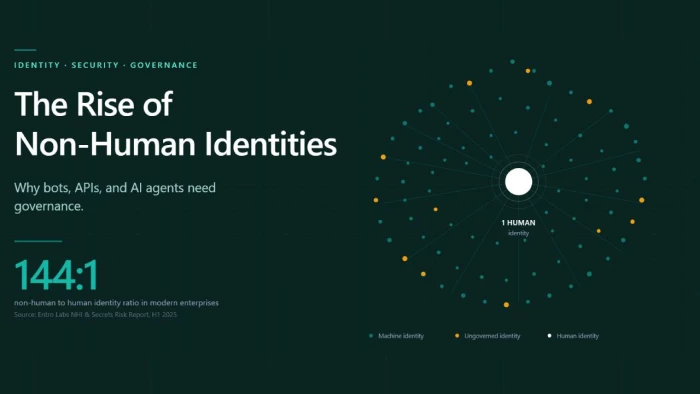
Every modern enterprise now operates two workforces. The first is the employees,...
Deepak Mehra1 month ago

Three months ago, I closed Cursor mid-sentence, downloaded a 180MB installer, an...
Sakshi Dhingra1 month ago

You've probably already read five articles trying to figure this out. I have too...
Sakshi Dhingra1 month ago
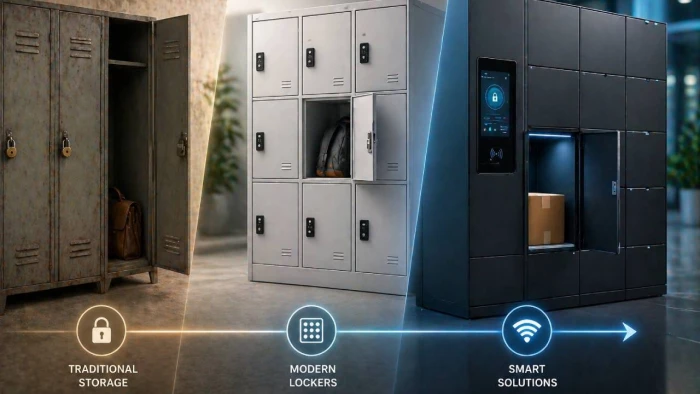
Locker manufacturing has come a long way from simple metal compartments used in...
Parveen Verma1 month ago