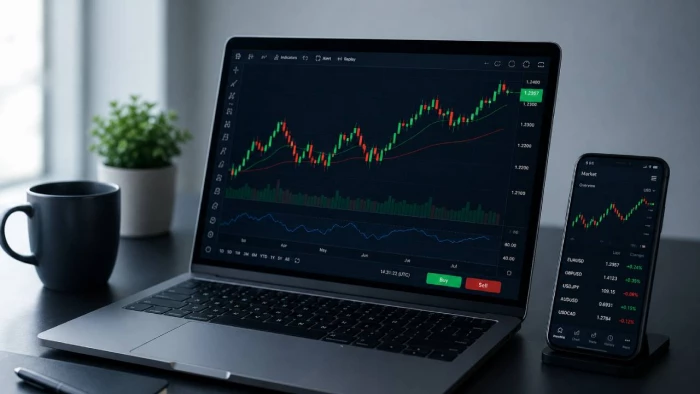
Choosing a Forex trading platform is not just about picking the one with the most features. It is about finding a platform that fits the way you actually trade. Modern traders face real demands: fast markets, multiple devices, and the constant need to act on information without delay. A platform that looks impressive in a demo but slows you down in live conditions is not practical at all. This guide breaks down what truly makes a Forex trading platform work for real-world traders, so you can make a smarter, more well-informed choice.
Practicality in a Forex platform is not a vague concept. It comes down to a clear set of expectations that any serious trader should have before committing to a platform.
For example, a fast-execution Forex platform should process orders quickly, display pricing clearly, and give traders the tools they need without making the experience feel complicated. It should also support smooth position management, especially during active market hours when prices change quickly.
Beyond speed, a practical platform should provide you with transparency. That means clear pricing, no hidden spreads that widen without warning, and honest reporting on trade history. You need to see exactly what you paid and when, without digging through confusing account statements.
Support matters too. A platform with good tools but poor customer service leaves you stuck at the worst possible moments. Live chat, phone support, and a responsive help center are all part of what makes a platform genuinely usable. Plus, educational resources and clear documentation reflect how seriously a provider takes the experience of its users. Start with these baselines before you ever look at advanced features.
A well-designed interface does not just look clean. It helps you think clearly and act faster. If you spend more time searching for a button than analyzing a chart, the platform has already failed you.
Good interface design in Forex trading means logical menu placement, customizable layouts, and clear visual hierarchy. You should be able to spot your open positions, pending orders, and account balance at a glance. Anything that requires multiple clicks to find is a friction point, and friction costs you in live trading.
Most traders today use more than one device. You might analyze charts on a desktop at home, check positions on a browser during lunch, and manage alerts on your phone in the evening. A practical platform handles all three without forcing you to compromise.
Desktop applications generally provide the most processing power and the deepest customization. They suit traders who run complex setups with multiple charts and indicators. Web-based platforms, on the other hand, give you access from any device with a browser, which adds flexibility without installation. Mobile apps bring convenience, but they need to match the quality of their desktop counterparts, not just provide a stripped-down version.
The key question is whether your platform delivers a consistent experience across all three. If the mobile app lacks the order types available on desktop or the web version loads slowly, those gaps become real problems in live market conditions.
Charts are where your analysis happens. Order execution is where your decisions turn into trades. These two elements of a Forex platform deserve serious attention, because weaknesses in either one will show up in your results.
Charting tools should give you control. You need the ability to switch timeframes quickly, apply multiple indicators, draw trend lines, and save chart templates for repeated use. If the charting interface feels limited or slow to respond, your technical analysis suffers before the market even moves.
Execution quality goes beyond just how fast your order fills. It also covers how accurately the platform fills your order relative to the price you requested. Slippage, which occurs when you get a different price than expected, is a direct cost of poor execution. A practical platform keeps slippage low and gives you full visibility into your fill prices.
For technical analysis, consider what the platform actually supports. Standard indicators like moving averages, RSI, and Bollinger Bands are the minimum. But if your strategy depends on custom scripts, automated alerts, or advanced drawing tools, you need to confirm those features are available before you commit.
Order types also tell you a lot about a platform's depth. Market orders, limit orders, stop-loss, and take-profit functions are baseline. Beyond that, trailing stops, OCO orders, and one-click trading features can meaningfully improve how you manage risk and react to market moves. These are not luxury additions: they are practical tools for anyone trading with a consistent strategy.
No matter how good a platform looks, it is only as trustworthy as the structure behind it. Security and regulatory compliance are not optional considerations. They define whether your funds and personal data are actually protected.
A properly regulated platform operates under defined rules about how client funds are held. Segregated accounts, for example, mean your money is kept separate from the platform's operating funds. This protects you if the provider faces financial difficulties. Always check what regulatory authority oversees the platform and whether that regulation is recognized in your region.
Data security deserves the same attention. Two-factor authentication, encrypted connections, and secure login protocols are standard expectations now. If a platform does not provide these by default, that is a serious concern.
Payment flexibility is a practical matter that traders sometimes overlook until it becomes a problem. You want to deposit and withdraw funds using methods that are convenient for you, whether that is bank transfer, card payment, or a digital wallet. Delays in withdrawals are one of the most common frustrations traders report, so look into a platform's withdrawal processing times before you deposit.
Transparency around fees also falls into this category. Some platforms advertise low spreads but recover costs through inactivity fees, withdrawal charges, or overnight financing rates that add up quickly. Read the full fee schedule so you understand what you actually pay over time.
A practical Forex trading platform gives you speed, clarity, and confidence across every stage of your trading process. From the interface you navigate daily to the security structure that protects your funds, every element should work in your favor. Take your time to evaluate each layer before you commit. The right platform does not just support your trades: it actively gets out of your way and lets you focus on what matters most.
Share your thoughts about this article.
Be the first to post a comment!

Buying an AI tool after reading one polished review can be risky. Some reviews r...
Michael Hicklen1 week ago

Creating a first AI video clip sounds simple until the output comes back with th...
Mighva Verma1 week ago

Choosing an AI tool sounds simple until the options start looking the same. One...
Deepak Mehra2 weeks ago
Gauth AI tends to matter most at the exact moment it stops cooperating. A proble...
Mighva Verma2 weeks ago

Before You Start: What Remaker AI Can Actually DoMost disappointing AI edits fai...
Sakshi Dhingra4 weeks ago

Content pillar" is one of the most confusingly used terms in marketing because i...
Deepak Mehra1 month ago